Why Cybersecurity Platforms Are Moving Toward Continuous Testing Models
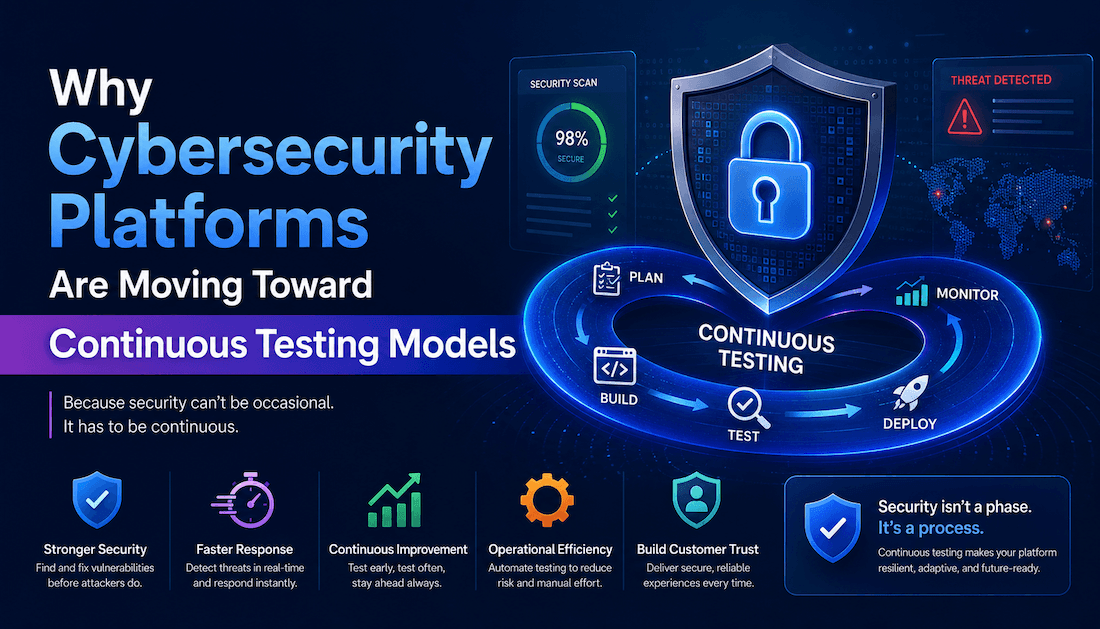
As cyber threats become more advanced and unpredictable, traditional security approaches are no longer enough to keep organizations protected. Businesses once relied on periodic assessments and occasional system checks, assuming that vulnerabilities could be identified and resolved in cycles. However, the modern threat landscape moves much faster, forcing companies to rethink how they secure their systems.
Continuous testing has emerged as a more effective way to stay ahead of potential risks. Instead of relying on fixed schedules, organizations are adopting ongoing evaluation methods that provide real-time insights into their security posture.
The Shift from Periodic to Continuous Security
In the past, security testing was typically conducted through annual audits or quarterly penetration tests. While these methods had their value, they often left long gaps between assessments. During these intervals, new vulnerabilities could emerge without being detected.
Today’s digital environments are constantly evolving. Software updates, cloud integrations, and remote access systems introduce new variables every day. This dynamic nature has made static testing models insufficient.
Continuous testing addresses this issue by providing ongoing monitoring and evaluation. Instead of waiting for the next scheduled review, security teams can detect and address vulnerabilities as they appear. This proactive approach significantly reduces the window of exposure and strengthens overall resilience.
Rising Complexity of IT Environments
Modern IT infrastructures have become more complex than ever. Organizations now operate across multiple platforms, including on-premise systems, cloud services, and hybrid environments. Each new integration increases the potential attack surface.
With so many moving parts, it is difficult to maintain visibility using traditional tools alone. Continuous testing helps bridge this gap by offering real-time analysis across all systems. It ensures that vulnerabilities are not overlooked, even in highly distributed environments.
Additionally, businesses are increasingly adopting DevOps and continuous deployment practices. This means that applications are updated frequently, sometimes multiple times a day. Without continuous testing, security risks could easily slip through during rapid development cycles.
Faster Detection and Response to Threats
Speed is a critical factor in cybersecurity. The longer a vulnerability remains undetected, the higher the risk of exploitation. Threat actors are constantly scanning for weaknesses, and even a small delay can lead to significant consequences.
Continuous testing enables faster detection of vulnerabilities and misconfigurations. Automated tools can simulate attacks, monitor system behavior, and flag unusual activity in real time. This allows security teams to respond quickly and mitigate risks before they escalate.
A modern cybersecurity platform that incorporates continuous testing capabilities can provide constant feedback, helping organizations maintain a strong defense posture. This ongoing visibility is essential in preventing breaches and minimizing potential damage.
Improved Compliance and Risk Management
Regulatory requirements are becoming more stringent across various industries. Organizations must demonstrate that they are actively managing and mitigating security risks. Traditional testing methods may not provide enough evidence of ongoing compliance.
Continuous testing offers a more transparent and consistent way to meet these requirements. By maintaining detailed records of ongoing assessments, businesses can prove that they are actively monitoring their systems and addressing vulnerabilities.
This approach also improves risk management. Instead of reacting to incidents after they occur, organizations can identify patterns and trends that indicate potential threats. This allows for better planning and more informed decision-making.
Automation and Advanced Technologies
The move toward continuous testing is also driven by advancements in technology. Automation plays a key role in making this approach feasible. Manual testing alone cannot keep up with the speed and scale of modern systems.
Automated tools can run continuous scans, perform simulated attacks, and analyze large volumes of data with minimal human intervention. Artificial intelligence and machine learning further enhance these capabilities by identifying anomalies and predicting potential risks.
These technologies enable organizations to maintain constant vigilance without overwhelming their security teams. Instead of focusing on repetitive tasks, professionals can concentrate on strategic decision-making and incident response.
Building a Proactive Security Culture
Adopting continuous testing is not just about technology, it also reflects a shift in mindset. Organizations are moving from a reactive approach to a proactive one, where security is integrated into every stage of operations.
This cultural change encourages collaboration between development, operations, and security teams. By embedding security into daily workflows, businesses can identify and fix issues early, reducing the likelihood of major incidents.
Continuous testing also promotes accountability, as teams are constantly aware of their system’s security status. This transparency leads to better practices and a stronger overall defense strategy.
Conclusion
The growing sophistication of cyber threats and the increasing complexity of digital systems have made traditional security methods less effective. Continuous testing provides a more adaptive and responsive approach, enabling organizations to detect vulnerabilities in real time and act quickly. By embracing this model, businesses can strengthen their defenses, improve compliance, and stay prepared in an ever-evolving cybersecurity landscape.
About The Author