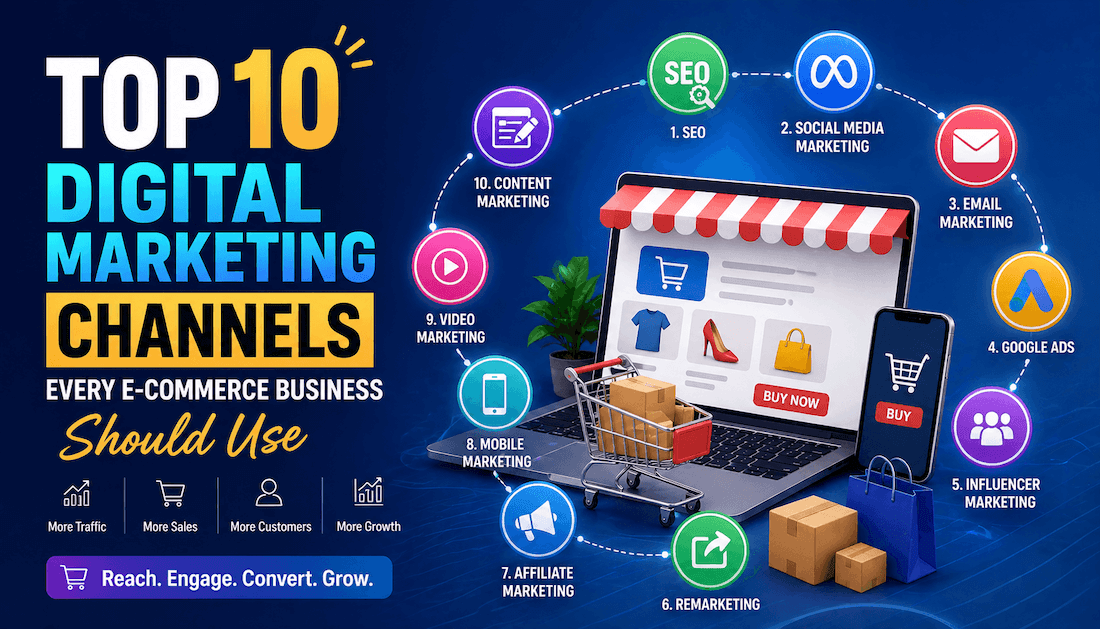
Top 10 Digital Marketing Channels Every E-commerce Business Should Use
Are you really reaching your customers where they spend most of their time or just hoping they’ll find you somehow? That’s the question most e-commerce owners avoid. At first, things feel simple. You launch a store. Add products. Maybe run a few ads. Then silence. Traffic comes in slow. Sales slower. It’s frustrating. And honestly, a bit confusing too.
Digital marketing isn’t one straight road. It’s more like a messy network of paths. Some fast. Some slow. Some that look promising but go nowhere. The trick is knowing which ones actually work for your store. Not every channel fits every brand. Still, there are some core channels that almost every successful e-commerce business uses, sometimes without even realizing it.
Let’s walk through them, not like a textbook. More like a conversation you’d have with someone who’s been there, tried things, failed a bit, and figured stuff out along the way.
1. Search Engine Optimization (SEO)
It usually starts with a simple thought: “Why isn’t my website showing on Google?” That’s where SEO comes in. Not flashy. Not instant. But powerful.
SEO is like planting seeds. You don’t see results the next day. Sometimes not even next month. But then, suddenly, traffic starts showing up. People are searching for exactly what you sell. No ads. No chasing. Just organic clicks.
- You tweak product titles
- You write better descriptions
- You fix site speed (which is annoying, honestly)
- You learn keywords slowly
Over time, it builds. The funny thing? Most people quit SEO too early. They expect quick wins. But SEO doesn’t work like that. It’s quiet growth. Steady. Reliable.
2. Pay-Per-Click Advertising (PPC)
Now, PPC is the opposite. Fast. Immediate. Almost addictive. You launch a campaign. Set a budget. Traffic right away. It feels like magic at first. Until you realize clicks cost money. Every single one. Still, when done right, PPC can be incredibly effective. Especially when:
- You’re launching a new product
- You need quick sales
- You’re testing demand
But there’s a catch—actually, several. You can burn money quickly. Like really fast. Bad targeting. Weak ad copy. Poor landing pages. It all adds up. And suddenly, you’re spending more than you’re earning. So yes, PPC works. But only if you respect it.
3. Social Media Marketing
This is where things get noisy. Everyone’s on social media. Brands. Influencers. Your competitors. Probably your customers, too. At first, you post randomly. A product here. A discount there. Not much happens. Then you start noticing something: people don’t just want products. They want stories. Personality. Something real. So, you try again.
- You share behind-the-scenes content
- You post quick videos
- You reply to comments (even the weird ones)
- You experiment with trends
Slowly, engagement grows. It’s not always predictable. One post flop. Another goes crazy viral. No clear reason sometimes. That’s just how social media is. Messy. But powerful.
4. Email Marketing
Email feels old. But it isn’t. Not even close. Think about it, social platforms can change anytime. Algorithms shift. Reach drops. But email? That’s yours. Your list. Your audience. Direct access.
I remember sending a simple email campaign once. Nothing fancy. Just a short message and a discount. Sales jumped overnight. It felt surprisingly easy. With email, you can:
- Remind customers about abandoned carts
- Share exclusive deals
- Tell your brand story
- Build loyalty over time
Automation helps a lot. You set it up once. It keeps working. Even while you sleep.
5. Content Marketing
Content marketing doesn’t feel like marketing at first. That’s the point. You’re not selling directly. You’re helping. Teaching. Sharing. Maybe write a blog post that answers a simple question your customer has, or create a guide that makes their life easier.
At first, it feels like too much effort. Writing takes time. Videos take even longer. And results? Not immediate. But then something shifts. People start finding your content and staying longer and trusting your brand more. And eventually buying. It’s subtle. Quiet. But it works.
6. Influencer Marketing
This one feels a bit risky at first. You’re trusting someone else to represent your brand. That’s not easy. But when it clicks, it really clicks.
Imagine someone your audience already trusts showing your product. Not as an ad. Just naturally. That’s powerful. Way more than traditional ads sometimes. You don’t need huge influencers either. In fact, smaller ones often perform better:
- More engagement
- More trust
- Less cost
Still, choosing the right influencer matters a lot. One wrong match, and the whole campaign feels off.
7. Affiliate Marketing
Affiliate marketing is interesting. You’re basically building a small army of promoters. People who earn only when they earn. It sounds perfect. And in many ways, it is.
You don’t pay up front. You don’t risk much. Affiliates handle promotion. You handle fulfillment. But managing affiliates takes effort, too.
- You need clear tracking
- Fair commissions
- Good communication
When it works, though, it scales nicely. Quietly bringing in sales from places you didn’t even expect.
8. Video Marketing
Video changed everything. Seriously. People don’t just want to read about products anymore. They want to see them. In action. From different angles. Real usage. Real results.
A short product video can do what paragraphs of text can’t. There was a time when adding videos felt complicated. Now it’s almost necessary. Especially if you’re using tools like the WooCommerce product video Plugin, which makes showcasing products much more dynamic and engaging. You can:
- Demonstrate features
- Show real-life usage
- Build emotional connection
Honestly, video just feels more human.
9. Marketplace Marketing
Sometimes, building your own store isn’t enough. You need more visibility. More reach. That’s where marketplaces come in. Platforms like Amazon or Etsy already have traffic. Massive traffic. People go there ready to buy. Not browse. Buy. But it’s not easy either.
Competition is intense. Pricing wars happen. Listings need constant optimization. Still, the exposure can be worth it. It’s like opening a shop in a crowded market instead of a quiet street. More noise, yes. But also, more opportunities.
10. Mobile Marketing
This one’s often overlooked. Surprisingly. Think about how often people use their phones. Scrolling. Browsing. Shopping. It’s constant. If your store isn’t mobile-friendly, you’re losing customers. Mobile marketing isn’t just about design. It’s about experience.
- Fast loading pages
- Easy navigation
- Smooth checkout
Even small delays can push users away. They won’t wait. They’ll just leave. SMS campaigns and push notifications help too. Quick. Direct. Hard to ignore.
Conclusion
You don’t need to master everything at once. That’s overwhelming. Start small. Pick a couple of channels that make sense for your business. Focus there. Learn what works. Then expand.
Digital marketing isn’t about doing more. It’s about doing the right things. Consistently. Even when results feel slow. Even when things don’t go as planned. Because eventually they do.
About The Author